
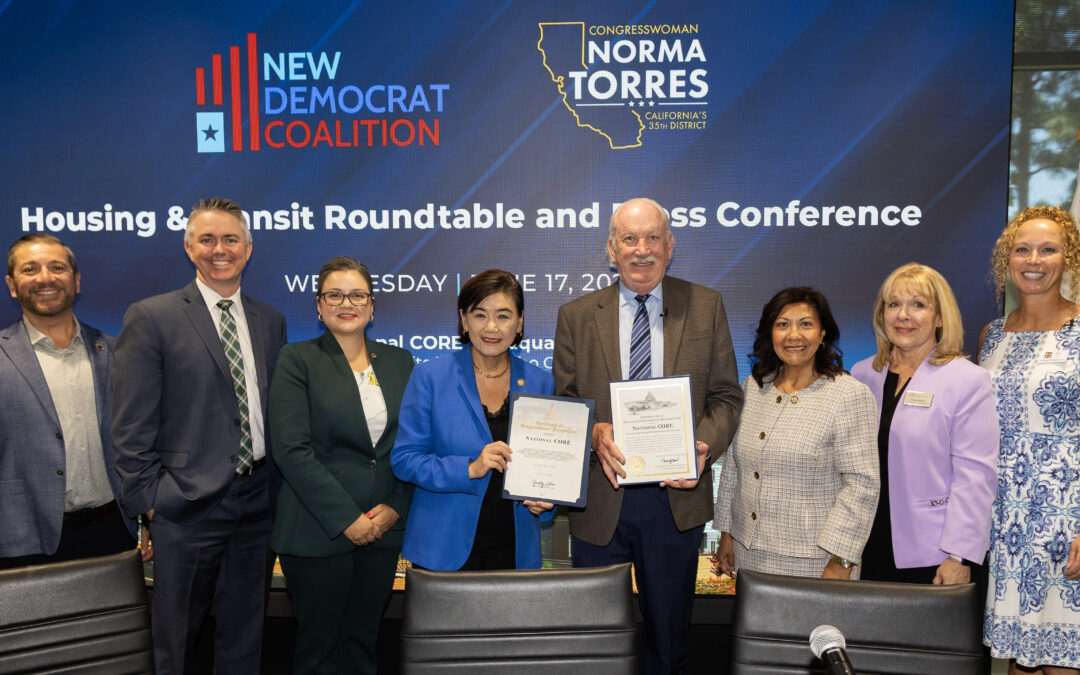
National CORE and Hope through Housing leaders recently joined industry leaders, transit executives and elected officials for a Congressional roundtable on how accelerating development of transit-oriented housing communities can help ease today’s affordability challenges.
The panel was hosted by U.S. Rep. Norma Torres at National CORE’s headquarters and focused on the relationship between housing, transportation and economic development. Participants discussed how transit-oriented housing can reduce household costs, connect residents to jobs and support regional growth.
Featured speakers included U.S. Rep. Judy Chu, National CORE President Michael Ruane, National CORE Chief Development Officer Alexa Washburn, Hope through Housing Foundation Executive Director Alyssa Cotter, Brightline West President Sarah Watterson, Neighborhood Partnership Housing Services CEO Clemente Mojica and Riverside County Department of Housing and Workforce Solutions Assistant Director Michael Walsh.
Jeff Burum, the founder of National CORE and Hope through Housing, delivered opening remarks for the event, noting National CORE’s role in strengthening communities by ensuring stable housing as a platform for opportunity.
“Every day for the last 40 years that I’ve been in the housing development business – there’s been a housing challenge. Today’s issues focus on climate change and housing costs and those converge to create affordability issues for families in need,” Burum said.
Burum said National CORE focuses on creating opportunity for families in need, including through tools like transit-oriented development.
“Unfortunately, too many parents have to choose between shoes, clothing and food,” he said. “We are creating opportunity. It’s what we fight for every single day – creating opportunity for families so children can choose their path.”
Washburn shared how affordability analytics often fail to consider all the costs faced by families, which creates pressure even for those in affordable housing. National CORE properties such as Vista Verde in Ontario and Arrowhead Grove in San Bernardino – walkable communities that provide access to transit options – provide relief to those struggling with the rising cost of living.
“Traditionally, housing affordability has been measured by a household spending no more than 30% of their annual income on housing. However, that really falls short on creating the true picture of the cost of living,” she said.
“It’s very common for people to be spending 55% to more than 80% of their income on housing and transportation. That creates a much different picture for affordability. That leaves very tough choices to make in some households for necessities, food and health care,” she said.
Ruane noted that well-intentioned government rules can have unintended consequences that delay or derail affordable housing. For example, the Build America, Buy America law can be a challenge when materials – electronics and circuit boards – aren’t available from American manufacturers.
In addition, federal environmental requirements necessary for receiving affordable housing vouchers can delay developments by as much as six months, even after a property meets stringent state requirements.
Housing leaders need to work together to share their challenges with federal officials so the process for building affordable housing can be streamlined, Ruane said. The results will benefit everyone involved because affordable housing communities are stable, low-risk investments that strengthen local economies.
“Affordable housing has the lowest default and foreclosure rate in any class of real estate,” Ruane said. “These are the safest investments that anyone can make.”
Watterson highlighted the role transportation investments – including the Brightline high-speed rail project – can play in connecting residents to services, amenities and employment opportunities.
Walsh discussed the importance of ensuring housing development keeps pace with economic growth throughout the Inland Empire, while Mojica emphasized the need to expand the local labor force to support the region’s continued growth.
Cotter said economic opportunity must be part of the affordability conversation. In addition to helping families manage rising costs, Hope through Housing works to connect residents with educational and workforce development opportunities that can help them build long-term financial stability.
“We create opportunity, stability and stronger communities,” Cotter said. “Children have access to after-school programs and educational support, families can receive financial coaching, seniors can stay connected and supported and residents facing mental health challenges can access care right where they live.”
The foundation is investing in its CORE Academy workforce development program, a free job training initiative serving residents in Los Angeles, Orange, Riverside, San Bernardino and San Diego counties. Through the program, Hope through Housing is helping residents gain skills, pursue careers and build economic stability in the communities they call home.
Recent Comments